

9th April 2026
Stories
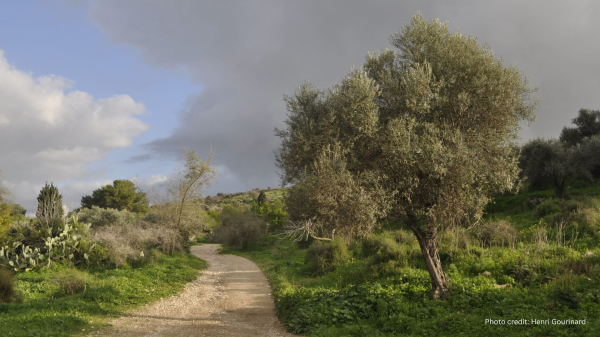
When the Journey Is the Point: What the Emmaus Road Taught Me About My Own
A personal reflection by Jeannie McGinnis
There is a road most of us have walked — not the dusty path between Jerusalem and Emmaus, but the one that feels just like it—the road of aftermath. The one you find yourself on when belief has cracked, or something has hurt you in ways you weren't prepared for, and all you know is that you cannot stay.
That is where we find these two disciples in Luke 24. Their hopes had been vivid and real — they had believed Jesus would change everything. But even the report of an empty tomb had not brought peace. It had only added confusion to an already unbearable grief.
There is something painfully honest in their words: we had hoped. Past tense. That shift — from hoping to having hoped — is one of the loneliest places a person can inhabit.
I know something of that road. Years ago, my husband and I were pastoring a church, walking alongside a gifted young couple who led our student ministry. That summer, as the young man was stepping into greater leadership on the team, we received a phone call that changed everything. They had been hit by a drunk driver and killed instantly. The pain, disappointment, and confusion barrelling into our church members and community like a tsunami. Though more than thirteen years have passed, I still feel the ache when I think about that summer with all its funerals, teary conversations and utter dismay. It was into pain something like that — raw, disorienting, unresolved — that Jesus stepped onto the road.
The Stranger Who Draws Near
He didn’t announce Himself. He simply fell into step beside them and asked: What are you talking about?
He didn’t correct them immediately or rush past their confusion. He walked with them. He listened to their whole story before He said a word in response. This is the posture of God — not distant, not hurried, but present and paying attention.
When He finally speaks, He says: How foolish you are, and slow of heart to believe. Personally, I think the Greek word implies no real sting (more like ‘hey, I think you’re being a bit thick here’) — it means simply, you're missing the bigger picture because they were not offended but leaned in. He then walks them through the Scriptures, reframing everything they thought they understood. Later they would reflect: Were not our hearts burning within us?
Truth, when Jesus reveals it, does not merely inform but ignites.
Why the Long Walk?
I have often wondered why Jesus didn't reveal Himself at once. Seven miles, uphill and down with two, maybe three hours of walking — and still Jesus did not reveal Himself. Not on the road, not when they arrived at the village, not until the quiet moment of breaking bread at the table when they got home.
Why the wait?
Because the journey itself was the point. Jesus was not simply interested in being recognised — He was interested in being fully present with them, gently re-navigating their shattered understanding, forming and restoring what grief had broken, and ultimately kindling in them a newfound joy.
Our Own Emmaus Roads
Most of us are somewhere on this road right now. The in-between seasons — a liminal space where what ‘was’ has ended and what ‘will be’ has not yet arrived — are not detours from the spiritual life. They are often the deepest part of it.
For me, the Emmaus Road looks less dramatic than it sounds. It's getting triggered by a comment that cuts deeper than it should, another unexpected detour with my health, or navigating the fallout of someone else's dysfunction. It's a road I find myself on more often than I'd like. So, I've learned — slowly, imperfectly — to get really, truly honest with Jesus. Not polished-prayer honest. Ugly honest. Then I wait, I listen, and when I can't see clearly, I seek out those who are much wiser and let them help me find the path again.
But I want to be honest about where this journey stalls — because it does. Sometimes we cling so tightly to our wound that we cannot receive another perspective. Sometimes we stop believing there is a way forward, or we isolate, or — hardest to admit — we simply stop spending time with God. Not out of rebellion, but exhaustion. Or the quiet despair that whispers: what's the point?
These are the moments we walk the road alone — or just sit down in the middle of it — unaware that Someone has already drawn alongside us.
The Question Underneath Everything
At the heart of this story is one question each of us must answer:
Do I believe God is bigger than this?
Bigger than the loss. Bigger than the unanswered prayer. Bigger than my capacity to understand.
The disciples didn't have the full picture either, but Jesus didn't leave them there. He walked with them, opened the Scriptures, broke the bread — and their eyes were opened.
He is still doing that. On every road. In every in-between.
Jeannie McGinnis is the St Hild Communications and Marketing Officer
*Modern-day 'Road to Emmaus' photo credit: Henri Gourinard


